


Why Your Toothbrush Can’t Remove Hardened Tartar (But We Can)
If you brush twice a day and floss regularly, you might think your teeth are fully protected. But there is one thing your toothbrush simply cannot do — and that is remove hardened tartar. Understanding why your toothbrush can’t remove hardened tartar (but we can) in Nederland is the first step toward truly protecting your smile. At Nederland Family Dental, Dr. Whitney Gomez helps patients understand what happens beneath the surface — and why professional care matters so much.
What Is Tartar and How Does It Form in Nederland Patients?
Tartar — also called calculus — starts as soft, sticky plaque. Plaque forms on your teeth every single day from bacteria, food particles, and saliva. When plaque is not fully removed, it begins to absorb minerals from your saliva. Within 24 to 72 hours, it hardens into tartar.
Once tartar has hardened, it bonds tightly to tooth enamel. It can also form beneath the gum line, where it is completely invisible. No amount of brushing or flossing will break it loose. This is a natural biological process — not a sign that you are doing something wrong.
Tartar buildup is extremely common here in Southeast Texas. Our warm, humid climate does not cause it directly. However, diet, dry mouth, and genetics all play a role in how quickly tartar develops for different patients.
Why Your Toothbrush Can’t Remove Hardened Tartar
Your toothbrush is excellent at removing fresh plaque. Soft bristles sweep away bacteria and food debris from smooth tooth surfaces. But hardened tartar has a rough, crusty texture that physically grips your enamel. Brushing over it simply does not dislodge it.
Floss is equally limited once tartar forms. Floss removes debris between teeth, but it cannot scrape away calcified deposits. Even electric toothbrushes — while more effective than manual ones — cannot break the bond between tartar and your tooth surface.
Here is why the chemistry matters. Tartar is mineralized. It is essentially calcified material fused to your teeth. You would need a specific type of tool — and professional training — to safely remove it without damaging enamel or gum tissue.
- Soft plaque can be removed at home within 24–48 hours of forming
- Once hardened into tartar, only a dental instrument can remove it safely
- Tartar above the gum line is visible as a yellowish or brownish deposit
- Tartar below the gum line is invisible but far more damaging to gum health
- Attempting to scrape tartar at home risks scratching enamel or cutting gum tissue
What a Professional Cleaning Actually Removes
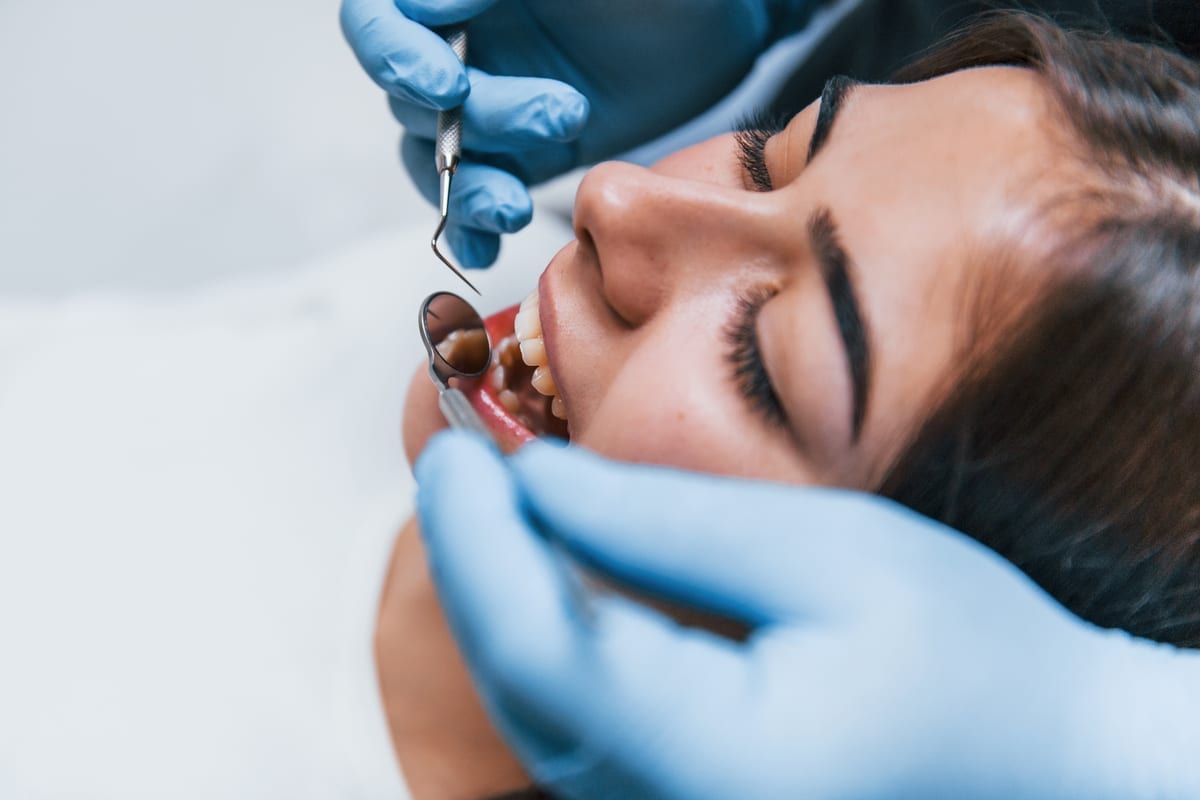
A professional dental cleaning at Nederland Family Dental goes far beyond what any toothbrush can reach. Dr. Gomez and our hygiene team use specialized instruments called scalers and ultrasonic tools. These are designed specifically to break apart and lift hardened tartar safely.
During your cleaning, we remove tartar from all tooth surfaces — including below the gum line. We also polish your teeth to remove surface stains that brushing leaves behind. Finally, we flush out the bacteria-rich debris that hides in gum pockets.
Here is what a professional cleaning addresses that home care cannot:
- Subgingival tartar — deposits hidden beneath the gum line
- Calculus on the backs of lower front teeth — a common buildup spot
- Surface staining embedded in enamel texture
- Bacteria colonies living inside deep gum pockets
- Early signs of gum disease that develop silently under tartar
This level of cleaning protects more than your teeth. It protects your gums and the bone that holds your teeth in place. Left untreated, tartar-related gum disease can lead to tooth loss over time.
The Consequences of Skipping Your Cleaning
Many patients in Nederland postpone their cleanings for months — sometimes years. Life gets busy, and a cleaning can feel optional when your teeth do not hurt. But tartar buildup creates serious consequences that develop quietly.
Untreated tartar feeds the bacteria responsible for gum disease. Those bacteria release toxins that inflame gum tissue. Over time, inflamed gums pull away from teeth, forming deep pockets. Bone loss can follow — and that process is not always reversible.
Tartar also increases your risk of cavities. Its rough, porous surface traps bacteria right against enamel. This accelerates decay, especially near the gum line where tartar tends to accumulate most heavily.
If you experience sudden pain or swelling related to untreated tartar or gum infection, you may need Emergency Dentistry Nederland care before a routine cleaning is even possible. Addressing tartar buildup early prevents these urgent situations from developing in the first place.
How Often Should Nederland Patients Get a Professional Cleaning?
Most patients benefit from a professional cleaning every six months. However, some patients need cleanings every three to four months. This is especially true for those with a history of gum disease or rapid tartar formation.
Dr. Gomez will evaluate your individual tartar buildup rate and gum health during your exam. She will then recommend a cleaning schedule that fits your specific needs — not a one-size-fits-all approach.
Consistent cleanings also give Dr. Gomez an opportunity to catch other concerns early. She may identify areas where improved brushing technique would help. She may also discuss cosmetic options if tartar-related staining concerns you. Patients interested in a brighter smile can explore Cosmetic Dentistry Nederland services alongside their preventive care plan.
What to Expect During Your Cleaning Visit
Many patients feel anxious about dental cleanings — especially if it has been a while since their last visit. At Nederland Family Dental, we create a comfortable, judgment-free environment. Dr. Gomez and our team understand that life sometimes gets in the way of regular visits.
Here is what your cleaning appointment typically involves:
- Examination: Dr. Gomez reviews your gum health and checks for any areas of concern before cleaning begins.
- Scaling: Our hygienist carefully removes tartar deposits from all tooth surfaces using hand scalers and ultrasonic instruments.
- Polishing: A gritty paste removes surface stains and smooths enamel to slow future plaque adhesion.
- Flossing: We floss between every tooth to remove any remaining debris loosened during cleaning.
- Rinse: You rinse away all dislodged deposits, leaving your mouth feeling fresh and clean.
The entire process is typically completed in under an hour for patients on a regular schedule. Those with significant buildup may require a deeper cleaning called scaling and root planing, which Dr. Gomez will discuss with you openly.
Conclusion: Give Your Smile the Care It Deserves
No matter how dedicated you are to home care, tartar will eventually form. Your toothbrush is a powerful first line of defense — but it has real limits. Professional cleanings at Nederland Family Dental close the gap that home care leaves behind. Dr. Whitney Gomez and our team are here to keep your smile healthy, comfortable, and protected for the long term. Book Now to schedule your appointment with our team.
Frequently Asked Questions
Can I remove hardened tartar at home safely?
No. Once plaque has hardened into tartar, it bonds firmly to tooth enamel. Home tools cannot safely break that bond. Attempting to scrape tartar yourself risks scratching enamel and cutting gum tissue, which can lead to infection. Only a trained dental professional using proper instruments can remove tartar safely.
How long does it take for plaque to turn into tartar?
Plaque can begin hardening into tartar in as little as 24 to 72 hours. The speed varies depending on your saliva chemistry, diet, and genetics. This is why daily brushing and flossing are essential — they remove plaque before it has a chance to mineralize and harden.
What does tartar buildup look like?
Above the gum line, tartar typically appears as a yellowish or brownish crusty deposit, most commonly on the backs of lower front teeth and around the gum line. Tartar below the gum line is not visible to the naked eye, which is one reason regular dental exams and X-rays are so important.
Does tartar cause bad breath?
Yes. Tartar has a rough, porous surface that harbors bacteria. Those bacteria produce sulfur compounds that cause persistent bad breath. No amount of mouthwash or gum will eliminate the odor if tartar is the underlying cause. Professional tartar removal is the most effective solution.
Is a professional cleaning painful?
Most patients experience little to no discomfort during a routine cleaning. If you have significant tartar buildup or sensitive gums, you may feel some pressure or mild sensitivity. Dr. Gomez and our team take care to work gently and will adjust the approach if you feel uncomfortable at any point during your visit.